Iceberg A-81 Slows Near South Georgia’s Underwater Shelf
Satellite observations follow a large Antarctic iceberg after its journey into the South Atlantic.
A long journey north
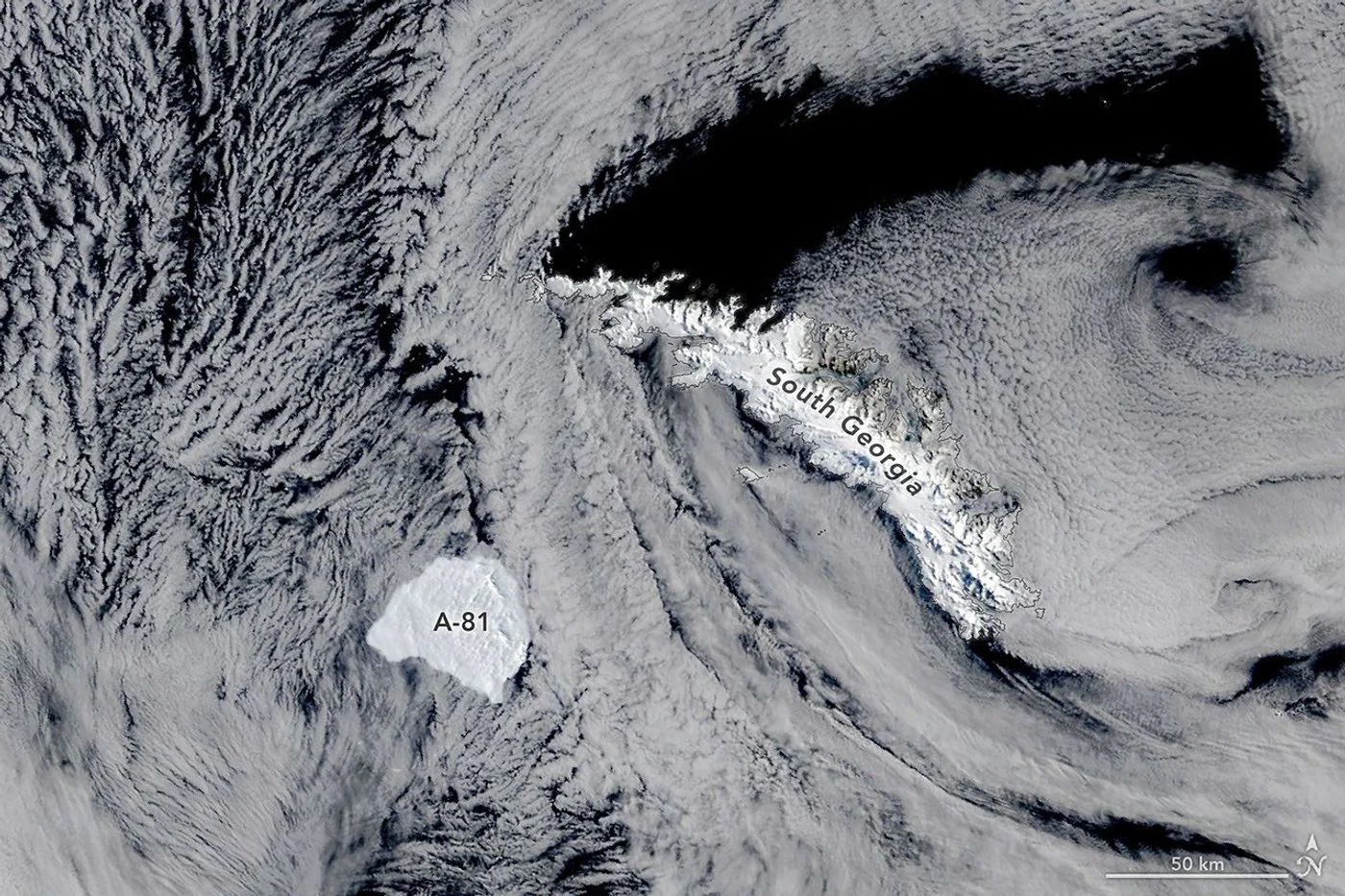
Iceberg A-81 has reached waters near South Georgia after leaving Antarctica’s Brunt Ice Shelf in January 2023. A Terra satellite observation from October 20 shows the large berg southwest of the island, with thin clouds crossing the scene.
A change in pace
NASA’s October 27 report says the iceberg’s movement slowed as it approached the edge of the island’s underwater shelf. After years in the Weddell Sea, A-81 had moved past the Antarctic Peninsula and into the Scotia Sea before reaching this part of the South Atlantic.
Why the location matters
Shallow underwater terrain can alter an iceberg’s movement or hold it in place. The observation therefore provides a location in an ongoing journey, rather than a prediction of its final destination. Continued satellite monitoring is needed to follow subsequent drift and breakup.
A large iceberg is visually dramatic, but its movement should be interpreted through dated observations rather than a single headline. Floating ice, seabed depth, winds and currents interact. An image cannot by itself establish what will happen next or attribute a particular calving event to one cause.
Source & verification
This independently written summary is based on NASA’s original report, released 2026-10-27. Consult the source for research details, methods and subsequent updates. NASA does not sponsor or endorse this publication.
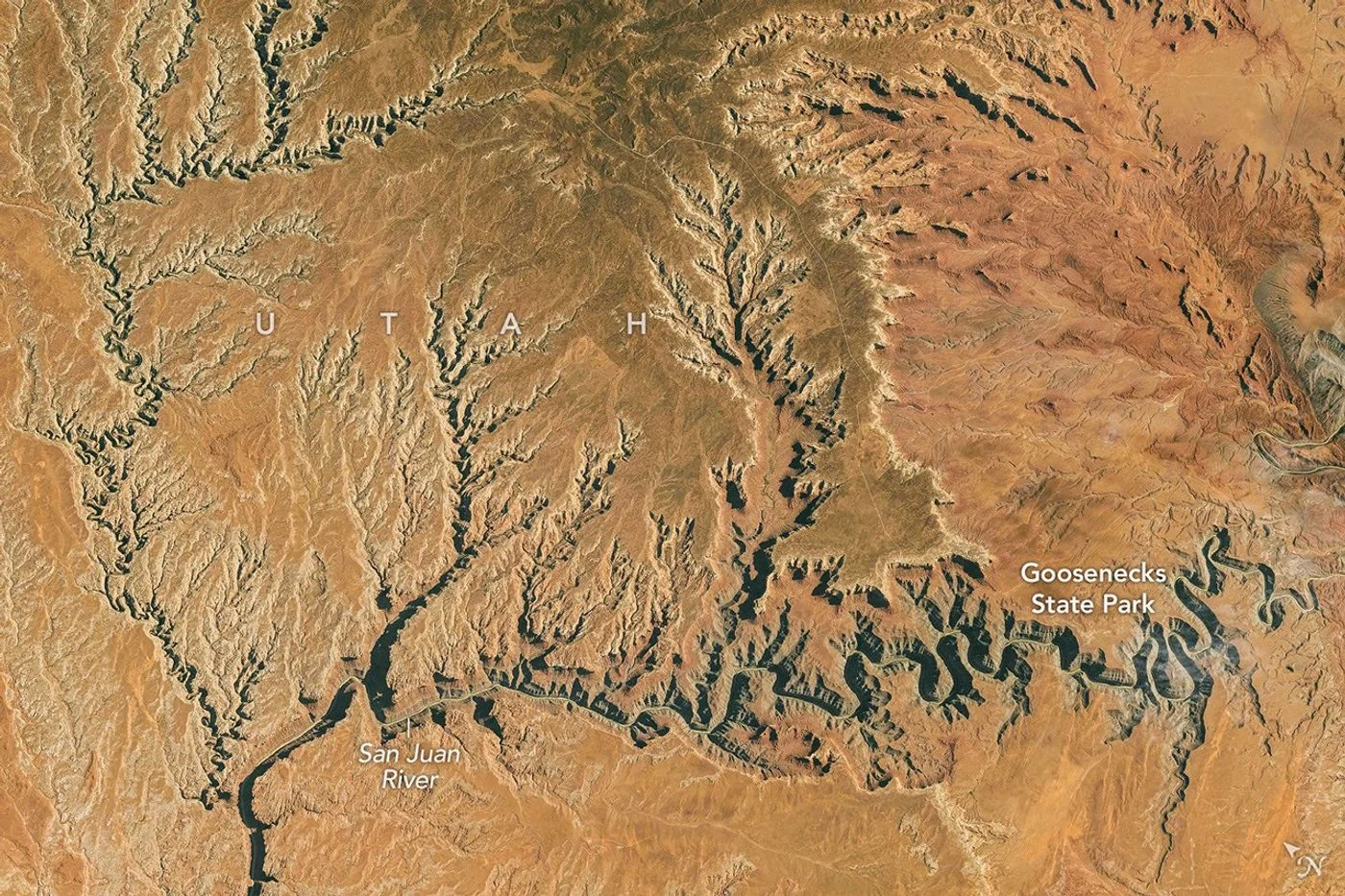 Astronaut Photograph Follows Utah’s Deeply Winding San Juan River
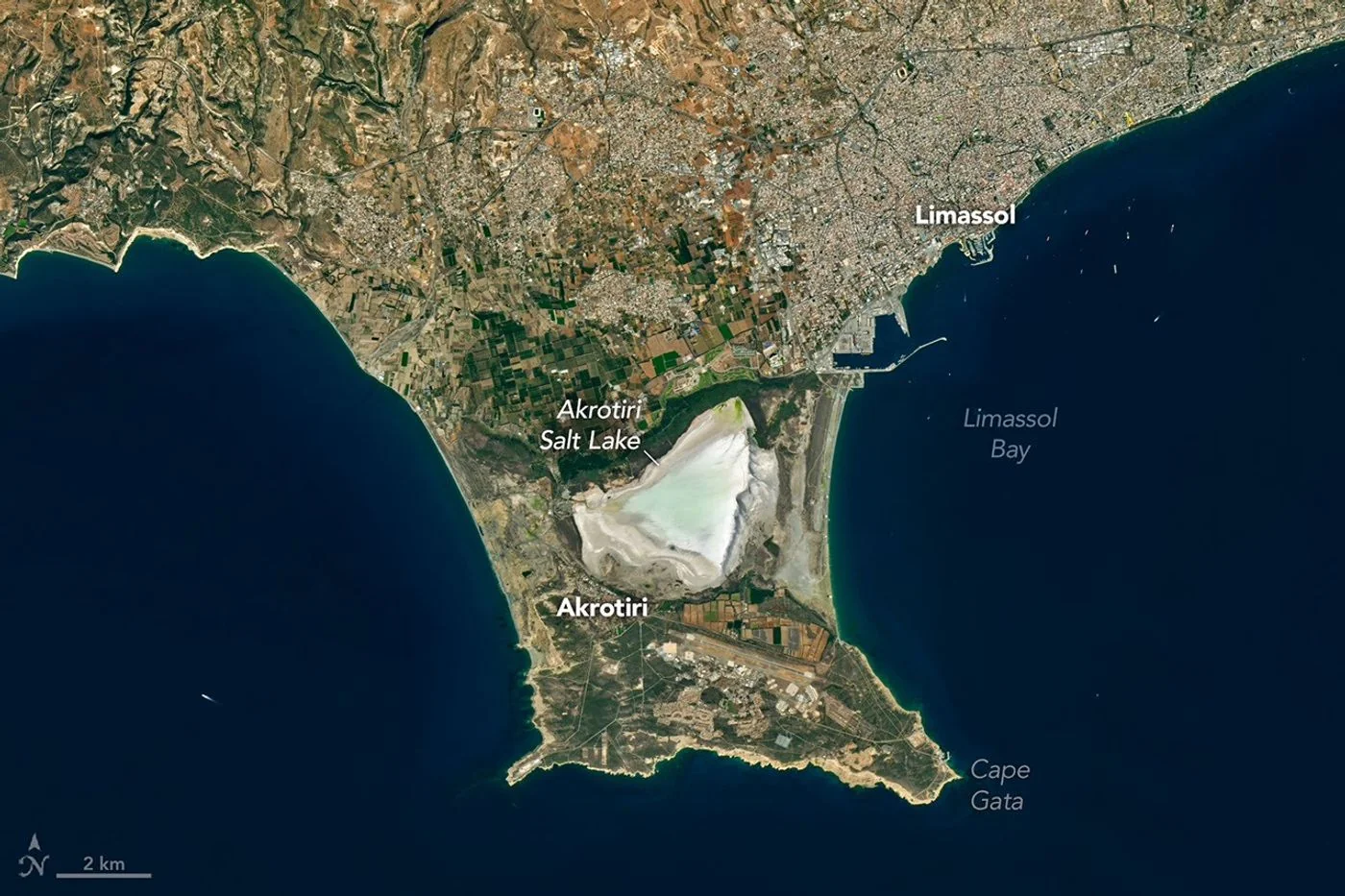 Landsat View Reveals the Changing Shores of Southern Cyprus